LEMON BALM MEDICINE MOMENT Lemon balm (Melissa officinalis), a perennial of the mint family (Lamiaceae) with an aromatic, pleasant, floral, lemon-like flavor that is cooling, calming, uplifting, and mildly astringent. It is used in formulas for bellyaches, anxiety, hyperthyroid, colds and viruses. FYI, if you don't have a wild patch growing nearby, it is quite easy to grow, and very worthwhile.
Read moreFIDDLEHEAD MOMENT = CROZIERS OF OSTRICH FERN

Ostrich Fern (Matteucia struthiopteris) unfurling April 27, 2019, Hudson Valley, NY. Perfect size for harvesting and eating . Note the brown paper-like scales on the emerging fronds.
Right now these majestic native American ferns, scientifically called Matteucia struthiopteris, are unfurling in the landscape and perfect for harvesting. HOWEVER, SUSTAINABLE HARVESTING IS A MUST!!! As a rule, pick from ferns with at least 4 fronds emerging and take no more than a 1/3 of the emerging fronds. Make sure you have ostrich fern fiddleheads: look for ……
Read moreNIBBLING AMERICAN ELMS IN NYC’S CENTRAL PARK

These immature samaras I hold in my hand are perfect for eating, offering a sweet pea-like flavor. (Samara is the term used for a winged fruit containing one seed, also seen on Ash and Maple trees.) A native tree of eastern North America, American elms (aka Ulmus americana of the Ulmaceae family) are doing well in NYC’s Central Park. They seem to be protected from the fatal Dutch elm disease, a fungal pathogen that kills most elms before they reach maturity. It’s always a treat to walk among the grand old elm trees in this park.
Do you eat elm samaras? If yes, in addition to eating them fresh out of hand, do you have an elm samara recipe to share?
Grateful to the elms!
TODAY’S WILD EDIBLE HARVEST BASKET (Early Spring)

TODAY’S WILD EDIBLE HARVEST BASKET
Contains violet leaf and flower (Viola sororia), nipplewort ……
Read moreSPICEBUSH = WELCOME AROMATIC FRIEND WHO BLOOMS IN EARLY SPRING BEFORE LEAF
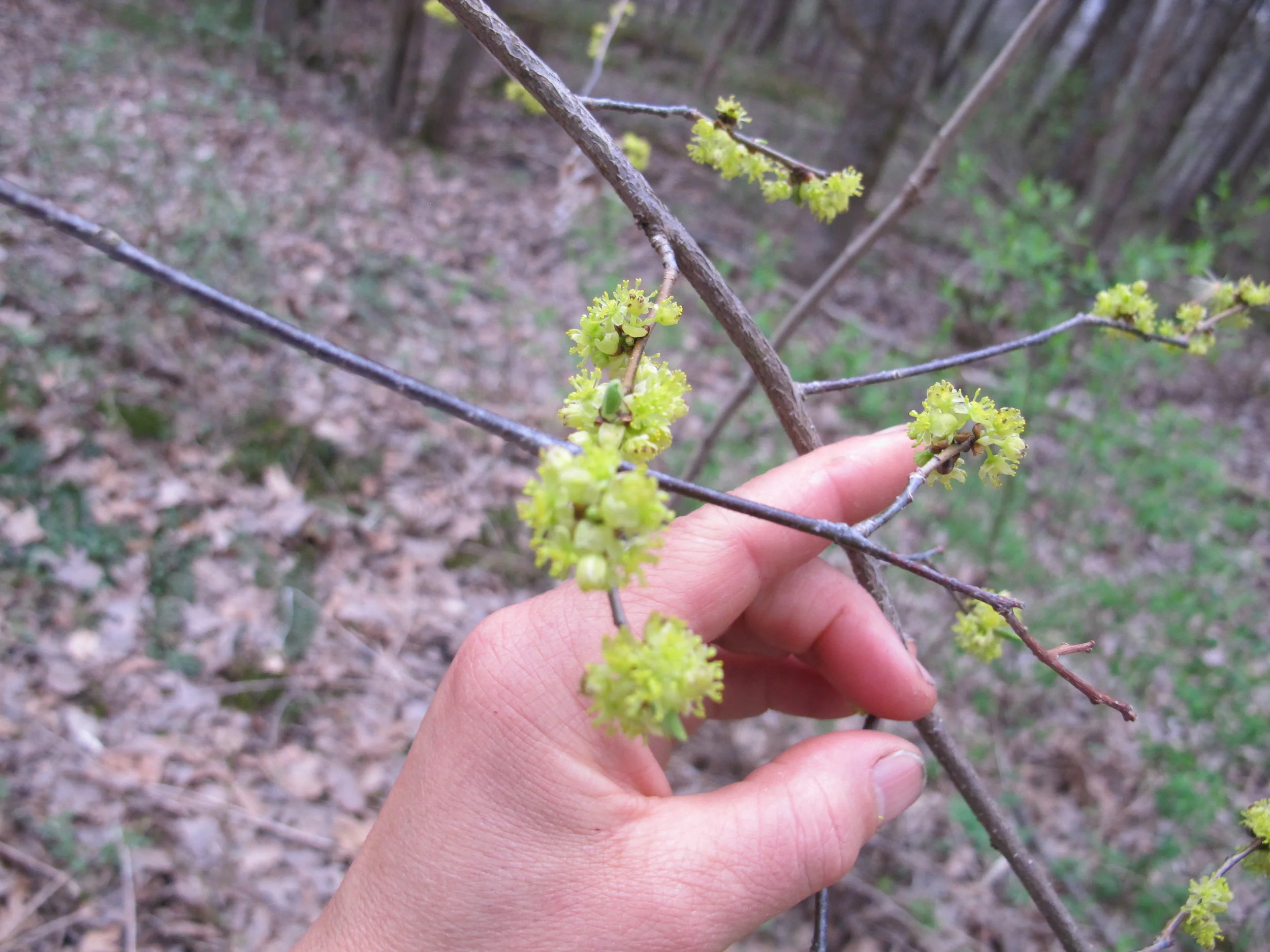
Spicebush (Lindera benzoin) In Flower
SPICEBUSH = WELCOME AROMATIC FRIEND WHO BLOOMS IN EARLY SPRING BEFORE LEAF
Read moreOH MY — THE WILD SALAD IS POPPING!
OH MY — THE WILD SALAD IS POPPING!
So many tender, flavorful, edible feral friends emerging into the spring sunlight right now. Taking a quick inventory: chickweed (both Stellaria pubera, and S. media), wild lettuce (Lactuca canadensis), purple dead nettle….
Read moreCOLTSFOOT FLOWERS, ONE OF THE FIRST FLOWERS OF THE SEASON
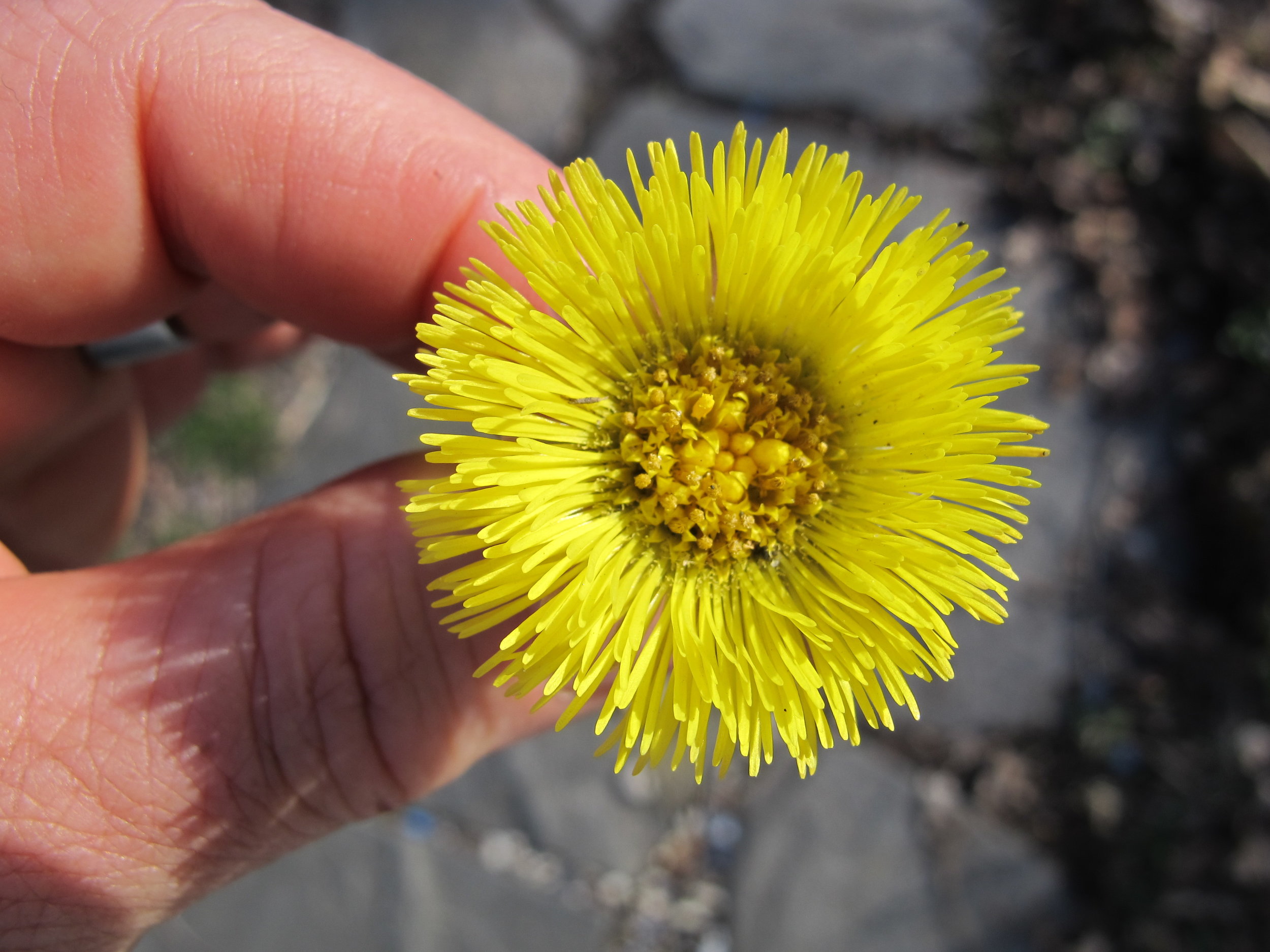
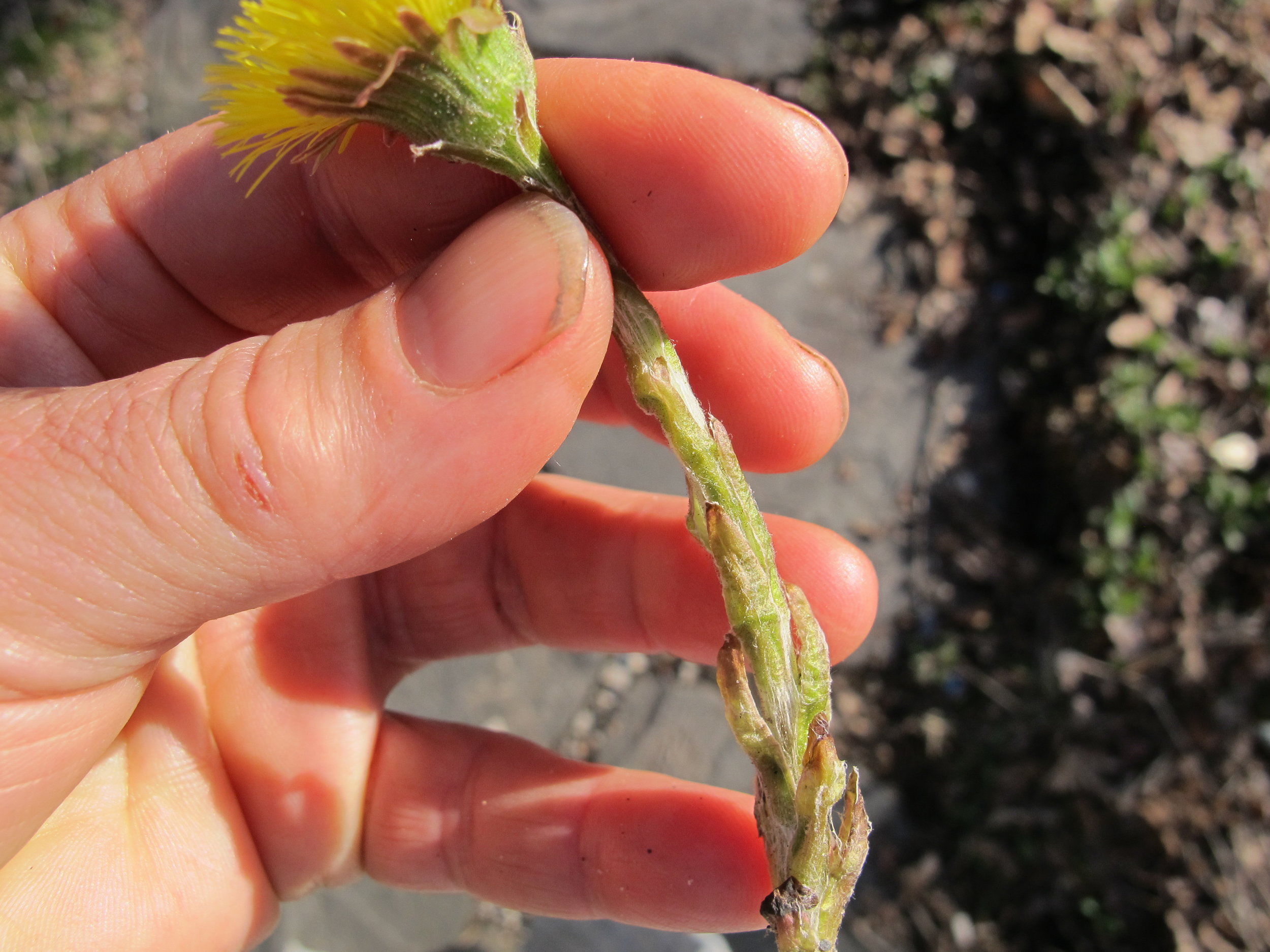
COLTSFOOT FLOWERS, ONE OF THE FIRST FLOWERS OF THE SEASON
These are not dandelion flowers, but one of its cousins that belong to the same family, the Asteraceae family. Scientifically referred to as Tussilago farfara, translation: cough dispeller. It blooms before its leaves appear.
Read moreHAPPY SPRING, HELLO CHICKWEED! (posted on 3/20/2019)
HAPPY SPRING, HELLO CHICKWEED!
Today brings the vernal equinox (for us in the northern hemisphere) where daylight starts to outshine the dark night. Pulsing green into the landscape, our wild edible friends start poking out of winter hibernation, and guess who’s there waiting for us: CHICKWEED!
NETTLE IS UP = YES!

SHOOTS OF STINGING NETTLE EMERGING IN LATE MARCH 2019
NETTLE IS UP = YES! This fiery wild edible, scientifically referred to as Urtica dioica, is a perennial of the Urticaceae family. It is a delicious wild food and potent herbal medicine — a prime example of where food and medicine meet.
Read moreHerbal Sea Salt Master Recipe: aka Herbal Finishing Salts
Herbal Sea Salt Master Recipe: Herbal Finishing Salts Makes about 3/4 cup
These zesty, pungent herbal salts can replace plain salt in many recipes and are especially tasty on salads, cooked veggies, grains, eggs, fish, roasted meats, popcorn, bread, etc. To make a delectable dipping sauce for bread pour 2 tablespoons of cold-pressed olive oil into a small saucer and sprinkle with ¼ teaspoon of Herbal Sea Salt.
Read moreMint Lassi Master Recipe
Mint Lassi Master Recipe
Makes 16 oz
Enjoy a traditional East Indian drink that is refreshing, cooling, tart, and slightly salty. It’s also full of hydrating electrolytes. On hot summer days when I work in the gardens and sweat profusely, nothing feels more replenishing.
Read moreWARMING HERBAL CHAI CHICORY ROOT STYLE
WARMING HERBAL CHAI CHICORY ROOT STYLE
Oh yes, now is the time of year when warming herbal infusions, such as this Chicory Root Chai, make everything better.
Read moreWILDNESS ON THE THANKSGIVING TABLE WITH CRANBERRY BLACKBERRY RASPBERRY RELISH

Here I hold wild cranberry (Vaccinium macrocarpon) in August, green and unripe. I spied them in an upland mini bog in the Shawangunk mountains and made a note of their location, planning to return in November when they would be ripe.
WILDNESS ON THE THANKSGIVING TABLE WITH CRANBERRY BLACKBERRY RASPBERRY RELISH
Read moreOSTRICH FERN = FIDDLEHEADS
OSTRICH FERN = FIDDLEHEADS Here I hold the dry and spent fertile frond of the ostrich fern, the delectable fiddlehead we gather in early spring. Scientifically named Matteuccia struthiopteris, this native American perennial sprouts two kinds of fronds, the non-edible spore producing one I hold here, and the luxurious (though sterile and now gone) green one that can reach five feet in height, and whose new spring growth produces the fiddleheads we gather.
Read moreCallaloo = Amaranth = ΒΛΗΤΑ
Callaloo = Amaranth: Just passed a store in Astoria Queens, NY where callaloo was for sale among other fresh produce. Love seeing wild greens as part of the food offerings in urban settings.
Read moreCelebrate Summer Solstice with Wild Fruit Ice Cream

Black raspberries (Rubus occidentalis) are one of the first wild berries to appear in the landscape. Tangy, richly flavored, mildly sweet, cooling & high in antioxidants, they make an amazing ice cream. To help with id, check our illustration right below.
CELEBRATE SUMMER SOLSTICE WITH WILD FRUIT ICE CREAM
Read moreWild Green Goddess In The Spring
WILD GREEN GODDESS IN THE SPRING
Read moreMayonnaise Master Recipe & All Its Herbal Variations
I find it extremely satisfying to blend up my own mayonnaise and I especially love to include the seasonal flavors of the field. Today's version is made with 3 tablespoons of wild bergamot leaves and 3 field garlic bulbets that have just emerged, making it even more delicious! I use whole eggs in this batch resulting in a lighter, thinner mayo. I am excited to share my master recipe here with you and hope that it will unleash your mayo-making talent. Please let me know how your mayonnaise turns out in the comments.
Read moreNettle Love: The Stinging Gourmet Vegetable + Frittata Master recipe

A basket filled with spring nettle tops that are about to be cooked.
Nettle love is when you can't get enough of this newly emerged, freshly cooked, wild vegetable. This perennial plant of the Urticaceae family is one of the first to show up once spring arrives. And it's so easy to prepare: just saute or steam it. Or substitute nettle for kale or spinach in your favorite cooked recipes. I love to make frittatas, and nettle frittatas are one of my favorites (see recipe below).
Nettle leaf has a rich, hearty (meaty), deep-green flavor. It is a blood-building, vitamin- and mineral-rich tonic food, especially high in calcium, magnesium and iron. Nettle is fiery. Use it to support circulation and resolve wet cold conditions in the respiratory system. It supports kidney and adrenal function and is used for improving skin, hair, joints, allergies and arthritic conditions. In addition to all these gifts, let's not forget the place nettle has as a gourmet vegetable to be eaten with breakfast, lunch or dinner. However, keep in mind that too much can be irritating/ stimulating to some enthusiastic nettle eaters (myself included). One serving a day hasn't caused any harm yet.
To help with identification and harvest, here is our Spring Nettle Plant Map from our book Foraging & Feasting. Remember to wear gloves when handling nettle to protect yourself from its sting — unless you want to (be clear about this) engage in urtication therapy, considered a topical treatment for congested, stiff muscles and joints.

Spring Nettle Plant Map from our book Foraging & Feasting: A Field Guide and Wild Food Cookbook by Dina Falconi; illustrated by Wendy Hollender
Frittata Master Recipe
Serves 4
Frittatas offer another great way to feature wild flavors while making a wholesome delicious meal. Serve them for breakfast, lunch, or dinner — or any time of day. A dish somewhere between an omelet and a crustless quiche, frittatas are simple to prepare. This basic recipe allows you to combine various wild greens, aromatic herbs, and cheeses to create satisfying frittatas with the seasonal offerings from fields, gardens, and farmers’’s markets.
- 5 tablespoons fat of choice: butter, olive oil, lard, bacon drippings, etc.
- 1 medium onion, finely chopped
- 3 cups of wild vegetable of choice*, coarsely chopped
- 2 tablespoons strongly flavored aromatic fresh herb, finely chopped, or 2 teaspoons if the herb is dried: wild bergamot, oregano, hardy marjoram, thyme, savory, etc.
- 6 large eggs, preferably organic and pasture raised
- 1/3 cup heavy cream, crème fraichefraîche, or whole milk, preferably organic and grassfed
- 1 cup grated cheese (cheddar or Colby type cheeses weigh about 3½ oz), preferably organic and grassfed
- 3 pinches salt to equal 1/4 teaspoon, or to taste
- 1/8 teaspoon black pepper, or to taste
* Some scrumptious wild choices: leaves and tender stems of nettle, yellow or broad-leaf dock, lamb’s quarter, amaranth, dame’s rocket, purple dead nettle, mallow; day lily shoots; and wild mushrooms.
- In an ovenproof, heavy bottomed, 9 inch pan, such as a cast iron pan, heat 3 tablespoons of fat over medium-low heat.
- Add onion and vegetable and sauté until tender, stirring occasionally; put the lid on the pan if needed to keep the vegetables from drying out.
- Once the vegetables are tender, add the strongly flavored aromatic herbs and 1 pinch of salt, and sauté for 1–2 minutes.
- Meanwhile, in a bowl, mix eggs with cream or milk, 2 pinches of salt, and 1/8 teaspoon black pepper.
- Stir sautéed vegetable mixture into egg mixture.
- Heat the remaining 2 tablespoons of fat in the pan, add the egg-vegetable mixture, and cook over medium-low heat for about five minutes, until the bottom of the frittata is cooked.
- Turn oven on to broil, sprinkle the cheese over the top of the frittata, and place in the oven about 4 inches away from the broiling flame. Broil the frittata until it puffs up and browns, about 5–7 minutes.
- Serve straight from the oven. Cold leftovers are delicious too.
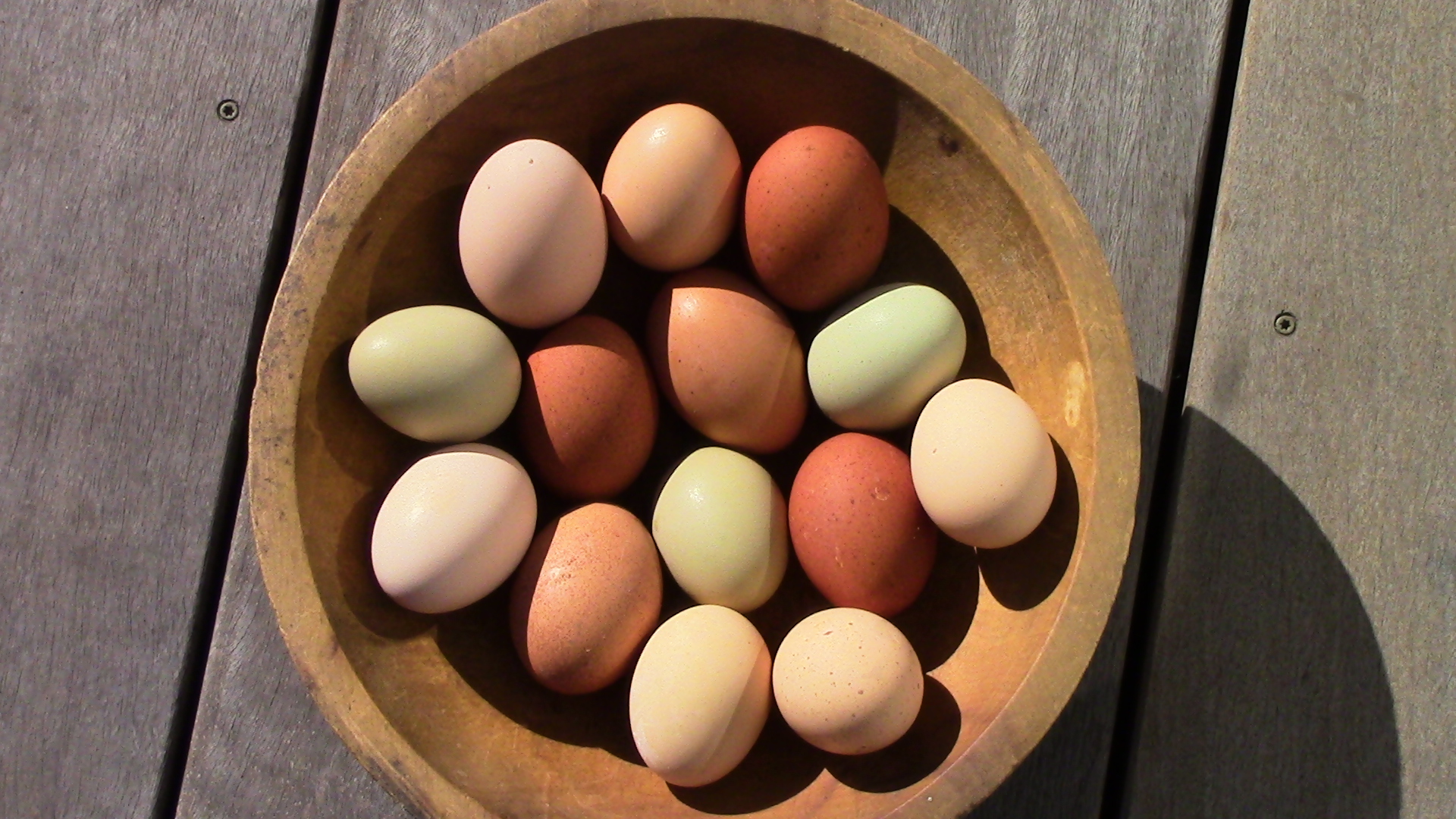
Eggs from the "feral" flock of hens who live in our edible forest chicken yard.
Golden Eggs From Pastured Hens: While all eggs provide a good source of complete protein, all eggs are not equal. Taking the effort to buy the best eggs available — ideally from pastured hens given free range to eat grass, weeds and bugs outside in the sunshine, and fed naturally grown, non-genetically modified grain — is well worth the effort. These eggs are truly nutritious, full of vitamins A, D, E, and K2, and contain a balanced fatty acid profile (omegas in the right ratios). So getting to know who has the best eggs in the neighborhood is worthwhile knowledge indeed.
I'm Loving "Wild Drinks and Cocktails" by EMILY HAN
I'm loving Emily Han's new book "Wild Drinks and Cocktails". She sent me a review copy and I am happy to say: I am thrilled to have it in my collection of cookbooks! It’s filled with all the detailed information one needs to create drinks from both the wild and cultivated plant realms.
Read more