Who is your herbal Valentine, do tell?
Grateful for this nourishing wild food and gentle powerful medicine.
Its heart-shaped leaf is a rich source of vitamin C + other nutrients, while offering a soothing touch to our skin and mucous membranes—and of course those lovely EDIBLE flowers!
To help with ID, harvest and use, here is our Violet Plant Map from Foraging & Feasting: A Field Guide and Wild Food Cookbook by Dina Falconi (me), illustrated by Wendy Hollender. To see more about our book, please go to our site here: www.ForagingandFeasting.com.
Today's Love Tea
This dry mix will make 4+ quarts of tea. Use 1 handful of mix per quart.
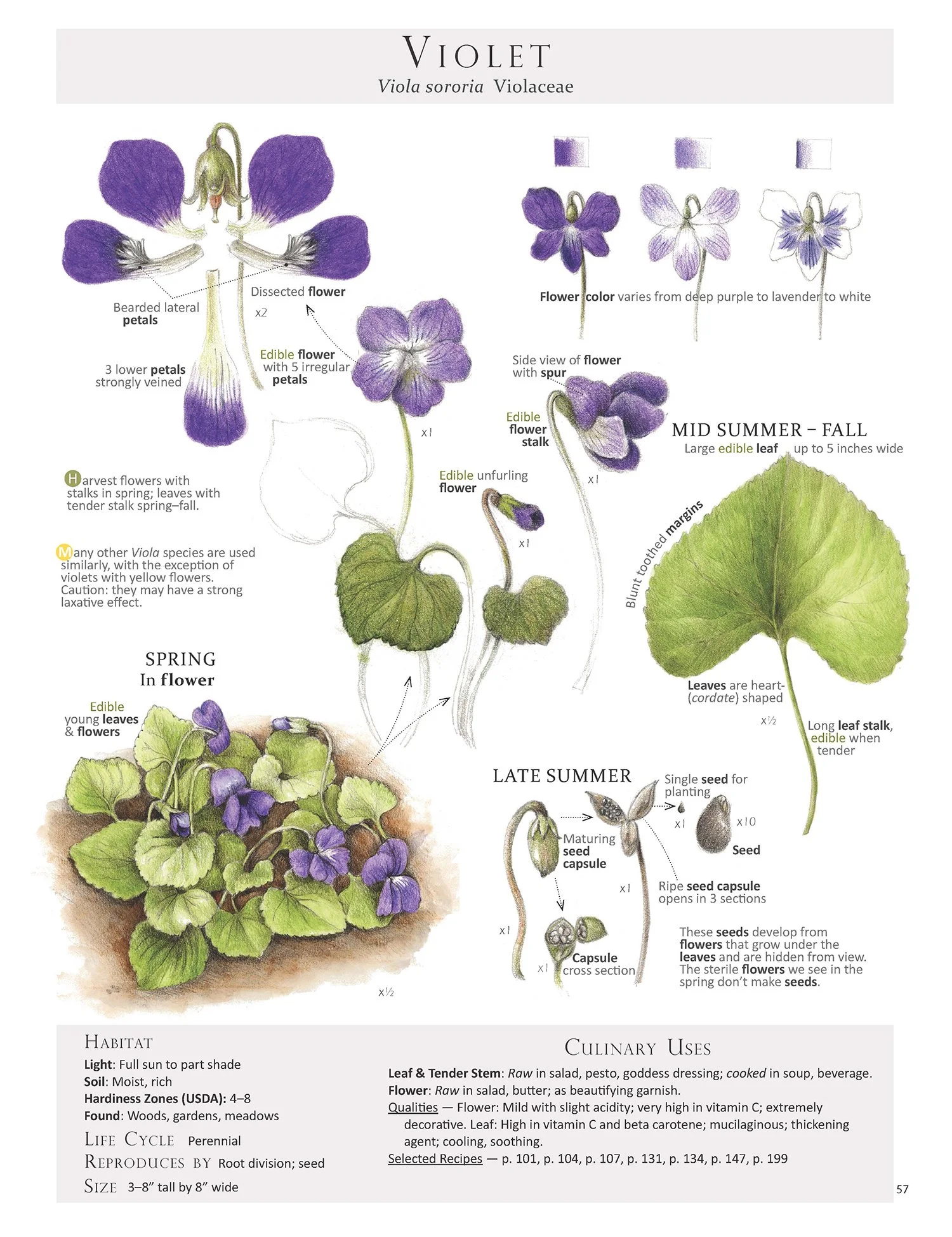
Violet from “Foraging & Feasting: A Field Guide and Wild Food Cookbook” by Dina Falconi, illustrated by Wendy Hollender. To see more about our book, please go to our site here: www.ForagingandFeasting.com.
violet leaf 1 oz
hawthorn berry 1 oz
rosehip 1 oz
damiana 1/4 oz
rose 1/4 oz
ginger 1/4 oz
vanilla 1/8 oz
nutmeg pinch
licorice root pinch
To make: Crush herbs right before use. Place a handful of the herb mix (about 1oz by weight) into a quart mason jar. Pour boiling water over the herbs and fill the jar to the top. Cap tightly and let steep for 1-4 hours. Strain, gently reheat in a covered pot, and if desired, add warm cream or milk and a touch of honey. Enjoy!
Do you use violet, and if yes, how so?

