Hello Nerve-Loving Herbs + Recipe

The world can feel crazy, and right now it feels very much so! Frazzled and frenzied, muddy and mushy, and drippy and dank are emerging from my corner of the world. Deep breaths and reassuring thoughts of peace, gratitude, and abundance are called in—along with this tea formula.
Hello nerve-nourishing, uplifting herbs to help with this tense, cold, dark moment!
Nerve-Tonic-Uplift Recipe

Oatstraw- 3 parts
Lemon Balm- 1 part
chamomile- 1part
rose- 1/2 part
licorice- pinch
cinnamon- pinch

This blend is made with dried herbs. The herbs are (ideally) weighed to get the parts right. I suggesting using ounces as the parts. And if so, this tea blend makes 5 1/2 ounces. Use about an ounce of the herb mixture per quart of infusion. To make the infusion, let steep for 4 hours, tightly covered. Then strain and drink.

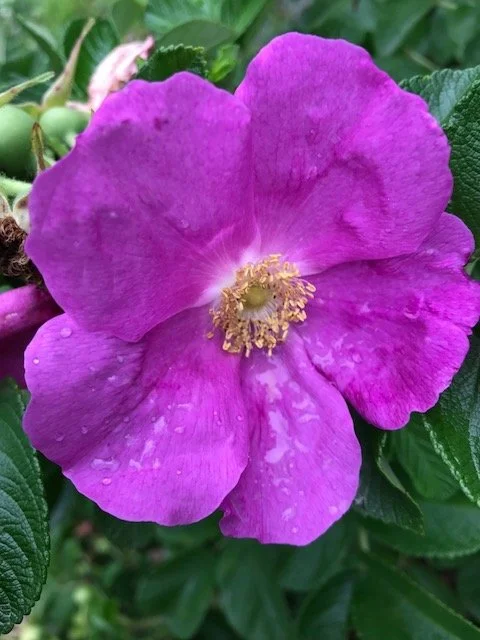
Rosa rugosa is a wonderful species of rose to harvest (or grow). The flowers and hips provide us with food and medicine. Today we call upon the flower for its heart warming, and love-evoking gifts.  

Technique on making oatstraw infusion < click here to view the video. Use this same technique for making the Nerve-Tonic-Uplift recipe, just use the tea mix in place of the oatstraw. https://youtu.be/hE_CX3D6qIM

Rose illustrated page from our book Foraging & Feasting: A Field Guide and Wild Food Cookbook by Dina Falconi; illustrated by Wendy Hollender. More about our book on our site here: www.ForagingAndFeasting.com
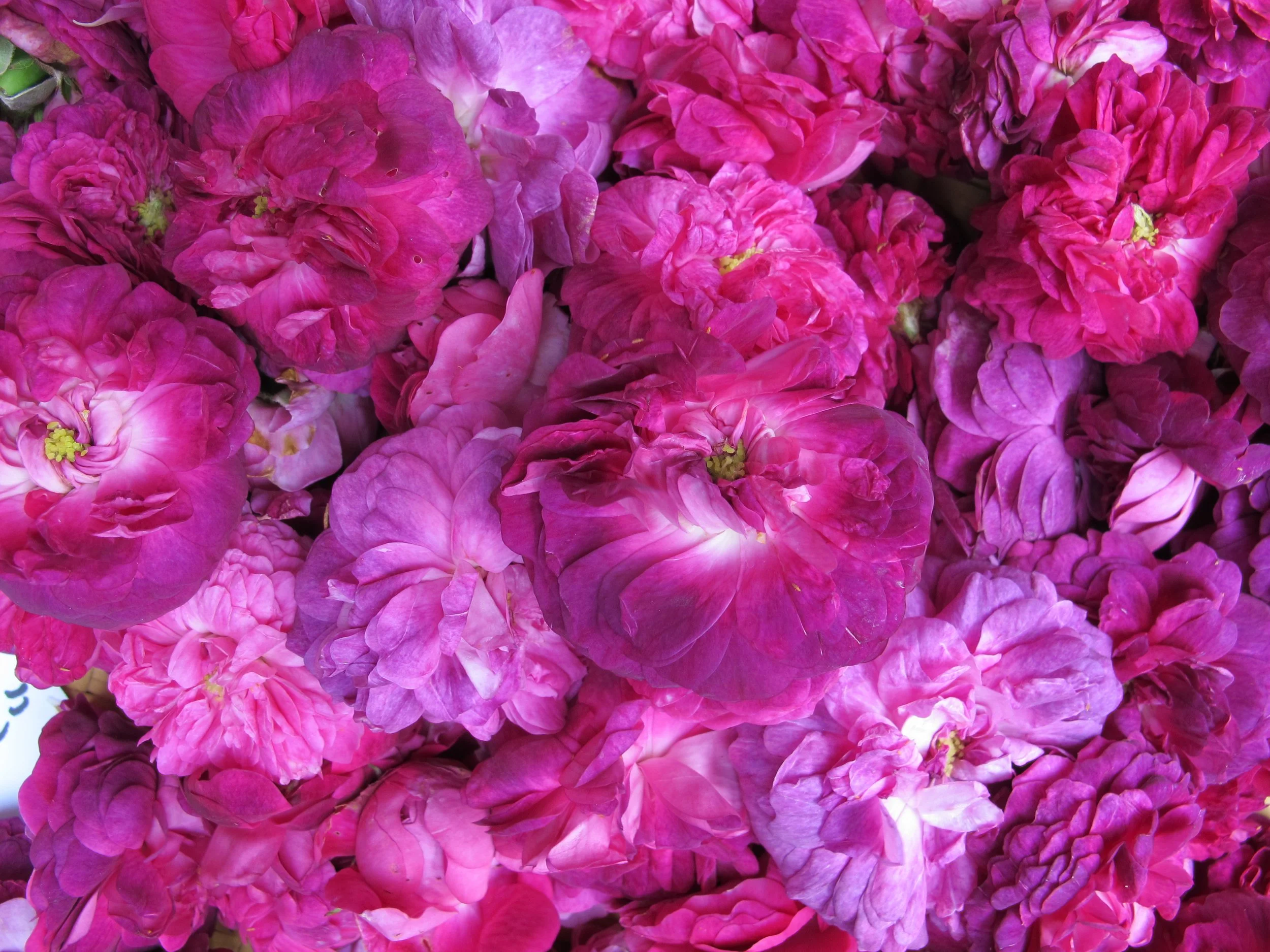
This is another species of rose: Apothecary Rose (Rosa gallica) picked in mid June; perfect for eating and medicine-making. And for sure, grow some, if you can!

Lemon Balm illustrated page from our book Foraging & Feasting: A Field Guide and Wild Food Cookbook by Dina Falconi; illustrated by Wendy Hollender. More about our book on our site here: www.ForagingAndFeasting.com

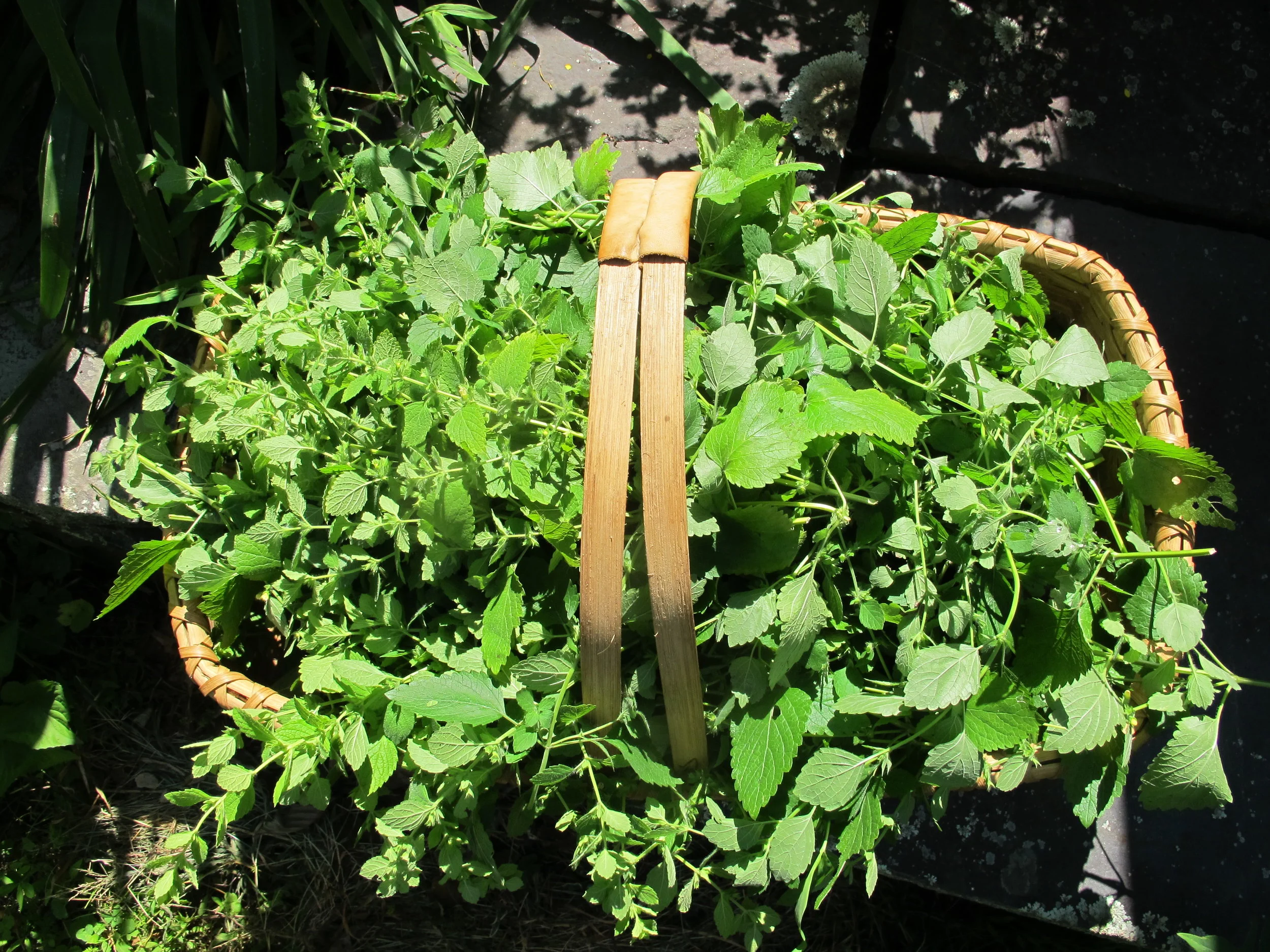
Lemon Balm flowering tops at the perfect stage for medicine-making. I gathered these in mid July (Mid Hudson Valley, New York) Lovely to see you lemon balm who calms and lifts our spirits. 
Sending peace and love!
In gratitude,
Dina

WITH MUCH LOVE!

Wild Bergamot-Monarda fistulosa.jpg
Egyptian Onion-Allium x proliferum.jpg
Lemon Balm-Melissa officinalis.jpg

Thankfully, there are so many herbs to help us stay well and to support us when we are sick. An abundance of herbs comes to mind that supports our immune systems: all the “spaghetti sauce herbs”—oregano, thyme, marjoram, and basil, and their wild native American cousin: wild bergamot (Monarda fistulosa); the alliums: field garlic (Allium vineale), garlic, onion, Egyptian onion, chive, leeks, etc. And then there is lemon balm (Melissa officinalis), a nice, tasty, relaxing, anti-viral herb. Elder, echinacea, boneset, yarrow, spilanthes, and elecampane are quite helpful, supporting us as move through illnesses. Keep in mind that by supporting the liver, kidneys, lymph, and digestion, we support our health. So bring on the liver supportive herbs: hello dandelion and burdock! Nettle, who so deeply nourishes, also supports these central systems. Grateful to all of this herbal support!

PS: To promote health, a nutrient rich, blood sugar stable diet is key, along with plenty of rest, and a good dose of outdoor activity, especially in nature. Then there is gratitude, the practice of being grateful. So many more thoughts come to mind but for now this will do.

What are you doing to support your health? Do tell!

Please note: this sharing is not intended to be used as medical advice.

Botanical illustrations from our book Foraging & Feasting: A Field Guide and Wild Food Cookbook by Dina Falconi, illustrated by Wendy Hollender ~ Click link in our profile for more about our book or here: http://bit.ly/1Auh44Q

Burdock-Arctium minus 1.jpg


LEMON BALM MEDICINE MOMENT

LEMON BALM MEDICINE MOMENT Lemon balm (Melissa officinalis), a perennial of the mint family (Lamiaceae) with an aromatic, pleasant, floral, lemon-like flavor that is cooling, calming, uplifting, and mildly astringent. It is used in formulas for bellyaches, anxiety, hyperthyroid, colds and viruses. FYI, if you don't have a wild patch growing nearby, it is quite easy to grow, and very worthwhile.

Read more